
Fees and collections
Review billed fees and settlement using explicit accounting definitions.
School fee reports Kenya
Use fees-and-collections reporting, learner balances, payment ledgers, student statements, and filtered exports without introducing a second financial truth.
The operational problem
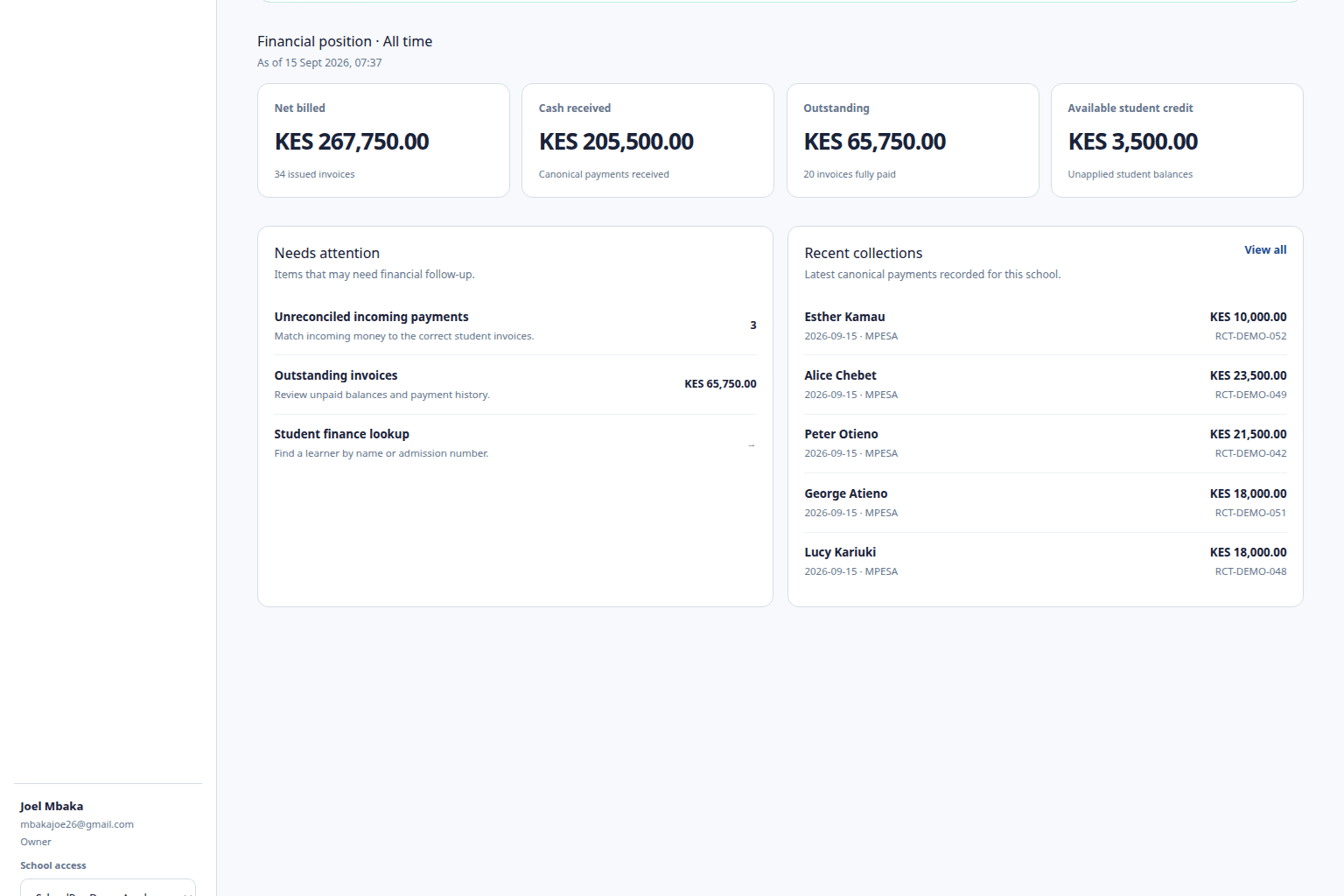
SchoolPey reporting distinguishes billed amounts, settlement, cash received, invoice allocation, carried-forward credit, outstanding receivables, overdue balances, and available learner credit.
Review billed fees and settlement using explicit accounting definitions.
See who still owes the school and drill back into the learner finance record.
Keep received amount, invoice allocation, and credit creation visibly separate.
Generate parent-facing fee statements from the same canonical financial history.
Produce management/accounting artifacts that retain the active report scope and definitions.
Export payment-ledger and outstanding-balance views using the filters actually shown on screen.
How SchoolPey handles the workflow
Start within the active school boundary and select the reporting period and supported school-native filters.
Read billed, settled, received, allocated, credit, outstanding, and overdue values using defined semantics.
Open the learner/payment behind the report or download the supported filtered artifact.
Frequently asked questions
No. SchoolPey reports focus on school-fee billed obligations, settlement, receivables, payment history, and learner credit. It is not a general ledger or statutory tax-filing system.
Yes. The balances view is designed to show school students with outstanding and overdue fee positions while preserving available credit separately.
Yes. The implemented reporting scope includes student fee statement PDF, school financial report PDF, payment ledger CSV, and outstanding balances CSV.
Try the real workflow
Evaluate the fee operation with actual billing, payment, reconciliation, balance, receipt, statement, and reporting workflows before standard billing.
Request a 1-month pilot